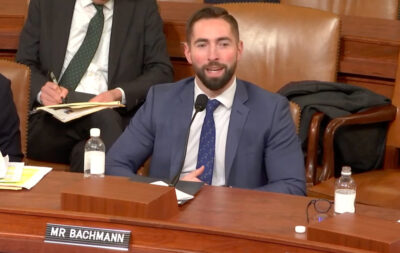
I recently had the honor of testifying before the House Ways & Means Subcommittee on Trade, and I’ll tell you what I told them: American rice farmers are getting a raw deal, and it has nothing to do with how hard they work or how well they farm. Our rice producers are among the most efficient in the world; the problem is that they’re not just competing against farmers in India or Vietnam. They’re competing against foreign governments that are pouring billions of dollars into their rice industries to undercut yours.
Here’s what’s happening in plain terms. The Indian government sets an artificially high minimum price for rice, buys up massive quantities of it, and then dumps the excess onto world markets at prices no American farmer can match. Their government eats the loss. You eat the consequences and consumers eat low quality rice grown and processed under dubious conditions. Over the last 21 years, rice imports into the United States have surged 257 percent, and our domestic market share has fallen from 85 percent to roughly 65 percent.
Meanwhile, India has grown from controlling 15 percent of global rice trade in 2008 to nearly 40 percent today. U.S. long-grain rice prices in 2025 dropped more than 30 percent year-over-year. Many farms in the South have posted negative returns three years running. We are staring down the smallest U.S. rice crop since the farm crisis of 1983.
But there is a way forward.
The Rules Exist. They Just Aren’t Being Enforced.
The World Trade Organization, or WTO, is essentially a referee for international trade. Every major rice-producing country, including India, signed agreements limiting how much they can subsidize their farmers. India’s limit is 10 percent of the value of what they produce. In reality, independent analysis shows India’s rice subsidies have run as high as 93.9 percent of production value – nearly ten times what the rules allow. The United States and allies have formally documented this for the WTO. Yet no one has taken India to court over it.
USA Rice first raised this alarm in 2011. Think about where we’d be today if action had been taken then, when India was primarily exporting specialty Basmati rice. Instead, years of inaction by the WTO let India become the dominant global supplier. We can’t afford to wait any longer.
What We’re Asking For
First, we want the U.S. government to help control the flow of foreign rice over our borders through a Section 301 investigation that will result in aggressive tariffs on all rice imports. We need to regain control of our domestic market before we conquer the rest of the world’s bad actors.
Second, we need to the U.S. government to formally challenge India’s subsidies through the WTO’s dispute settlement process – to take them to court under international trade law. The evidence is overwhelming and well-documented. There is no good reason this hasn’t happened yet.
Third, we support legislation, currently advancing in Congress as part of the new Farm Bill, that would require USDA and USTR to actively develop cases against countries cheating on trade rules. We haven’t brought an agricultural trade dispute against a country outside North America in more than a decade. It’s time
And we’d be remiss not to mention that despite all of our trade asks, we also need Congress to allocate additional help THIS year to rice farmers to help offset compounding losses.
There Is a Path Forward
None of this is hopeless. A 2025 federal trade study gamed out what would happen if all major exporters like India lowered their trade barriers to zero; U.S. rice exports could rise 41 percent and producer profits could climb more than 8 percent. When we say “fair trade,” that’s what we’re talking about.
There are signs the Trump Administration is serious about engaging with trade reform, and there is genuine bipartisan support in Congress for going on offense. After years of playing defense, U.S. agriculture finally has an opening to fight back through the very rules our trading partners agreed to follow.
You didn’t cause this problem. American rice farmers aren’t losing to Indian rice farmers – they’re losing to the Indian government. It’s past time the U.S. government stepped into the fight.
We use cookies to ensure that we give you the best experience on our website. If you continue to use this site we will assume that you are happy with it.