

By Kurt D. LaRose / Rice Farming
At the University of Arkansas Northeast Rice Research and Extension Center in Harrisburg, Arkansas, Horizon Ag welcomed growers, researchers, and industry partners to its annual field day — an event that has become both a tradition and a touchpoint for the rice community. As CEO Dr. Tim Walker put it early in the evening, “Our main focus tonight is just to create an environment where people can commune together and enjoy one another.”
But beneath the fellowship lies a deeper purpose: confronting the challenges facing U.S. rice production and reaffirming Horizon Ag’s commitment to farmers, innovation, partnerships, and quality.
Facing Industry Challenges with Optimism and Honesty

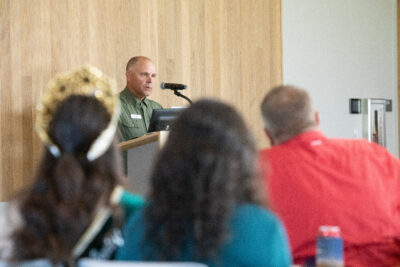
Farmers, Walker noted, are “the ultimate optimists,” already thinking about next year even as harvest approaches. Yet optimism doesn’t erase the realities of the current market. The U.S. rice industry is navigating rising production costs, competitive global markets, and quality concerns voiced by international buyers.
Walker didn’t shy away from the truth. “A lot of the complaints we hear, especially in our export markets, are the fact that Southern USA rice just does not mill as well as rice they’re sourcing from other places.” For Horizon Ag, reviving planted acres in the United States begins with delivering a product customers desire — and that means doubling down on quality, data, and transparency.
A 25-Year Legacy of Innovation

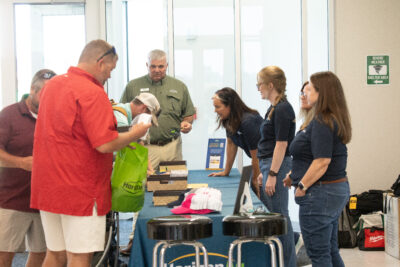
Horizon Ag’s story is rooted in problem-solving. The company introduced the first herbicide‑tolerant rice, Clearfield, in 2001 — a breakthrough that helped farmers combat red rice,one of the industry’s most persistent challenges. Later, in partnership with BASF, Horizon Ag brought Provisia to market, offering ACCase tolerance and improved control of grassy weeds and weedy rice. But adoption of Provisia has been slower in the Upper Delta, where rotations differ from coastal production systems. The missing piece, Walker explained, has been a high-performing variety that gives growers confidence in both weed control and yield.
That piece may finally be here.
PVL06: A Turning Point for Provisia Adoption
Developed by the University of Arkansas, PVL06 represents a major step forward. Horizon Ag launched it softly this year, expecting around 20,000 acres — and early results are promising. Walker highlighted its significance: “PVL06 offers industry‑leading weed control, but also has yield performance that’s going to rival our best Clearfield varieties.”
In university trials, PVL06 wasn’t just the best Provisia variety — it was one of the best varieties overall. For farmers who have hesitated to transition to ACCase technology, PVL06 may be the confidence-builder they’ve been waiting for.
Partnership at the Core
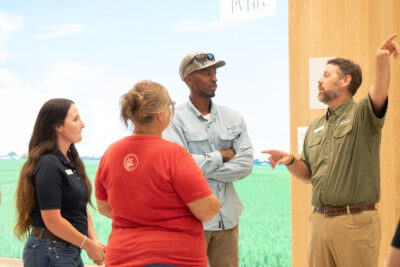
If there’s one theme Walker returned to repeatedly, it’s partnership. Horizon Ag was founded by five partners, and that collaborative DNA runs through every part of the company — from breeding programs to seed processing to retail relationships.
“We are not a company that could come out here and have the success that we have just standing alone,” he said. Horizon Ag works closely with LSU, the University of Arkansas, Mississippi State, Texas A&M, and the Missouri Rice Research and Merchandising Council. Even as Horizon builds its own breeding program, these partnerships remain essential for accessing elite germplasm and testing new materials across diverse environments. And the partnerships extend beyond institutions — they include alliances and collaborations with growers, retailers, and the communities that sustain rice farming.
A Company That Feels Like Family

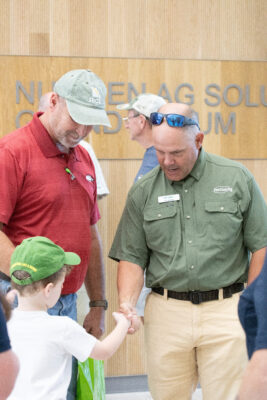
Walker spoke candidly about Horizon Ag’s culture. The company is close-knit, built on shared values and mutual respect. “We spend a tremendous amount of time at the workplace,” he said. “We believe our people are better employees when they have strong family units.”
Horizon Ag fosters an environment where employees feel challenged, accepted, and supported. Faith, empathy, and care for farmers are woven into the company’s identity. It’s a culture that shows up at events like the Horizon Ag field day, where familiar faces return year after year — and new ones join the fold.
Trust: The Foundation of Growth
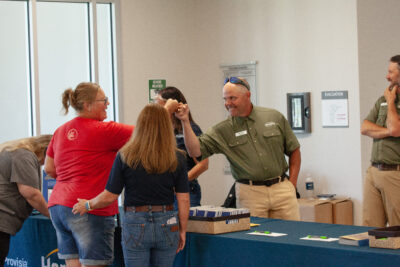
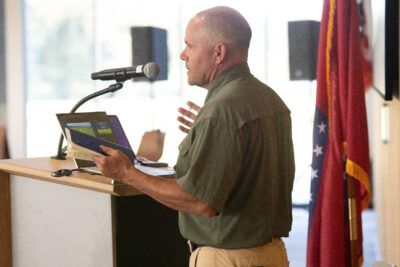
Trust, Walker emphasized, is the “magic sauce.” Farmers return because Horizon Ag has earned their confidence through data-driven decisions, honest communication, and consistent performance. “We’re not out there just following every fad that comes along,” he said. “We’re going to stand by the data.”
For farmers who haven’t yet planted Horizon Ag varieties, the invitation is simple: give the company a chance. Horizon Ag wants to earn trust through performance, agronomic support, and tailored recommendations based on each farm’s unique conditions.
Listening to Customers — Even When They’re Far Away
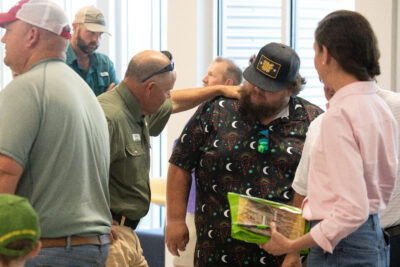
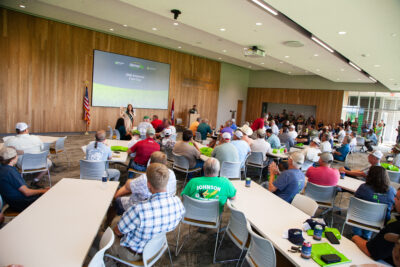
Horizon Ag’s commitment to understanding global buyers is noteworthy. Walker described traveling to South America, Central America, and Mexico to sit with customers and learn what they want from U.S. rice. “Our product is ultimately going to end up on someone’s table,” he said. “We have to provide a premium product if we’re going to sell rice at a premium price.”
Competition from South America has intensified, and many buyers who once considered U.S. rice “premium” no longer do. Horizon Ag believes the path forward requires humility, listening, and a renewed focus on quality.
Looking Ahead: New Varieties and Continued Collaboration


Before the evening wrapped up, Walker highlighted upcoming varieties, including CLL21 — a Clearfield line developed by the University of Arkansas that builds on CLL18 with improved blast resistance. “CLL21 will help us sleep better at night,” he said, noting its robust resistance gene and reduced need for fungicide applications. CLL21 is expected to be available to merchants, and therefore to farmers, in 2028.
The herbicide tolerant, lower demanding fungicide application, CLL21 is the result of university breeders at the University of Arkansas working in partnership with Horizon Ag and BASF. It’s another example of how partnership drives innovation — and how Horizon Ag continues to invest in solutions that help farmers succeed.
A Take-Home Message for Farmers
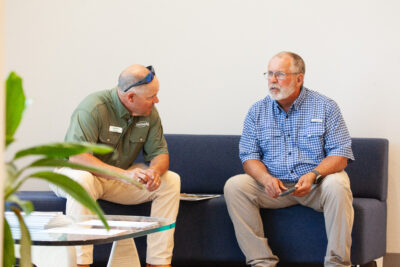
Walker didn’t offer a one-size-fits-all answer for growers planning next year’s crop. Instead, he offered honesty and partnership. “We may not fit on every acre,” he said. “But we have something that will fit on any farm — if given the chance and given the time to learn that farm’s situation.” The message was clear: Horizon Ag wants to walk alongside farmers, understand their soils, their management style, their challenges, and their goals — and then help them choose the right products for success.
A Legacy Built on More Than Seed
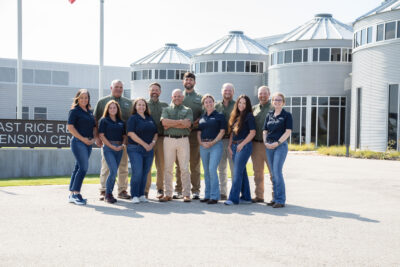
As the field day wound down, one thing was unmistakable: Horizon Ag is more than a seed company. It’s a legacy team — built on 25 seasons of innovation, partnership, and trust. And in an industry facing unprecedented challenges, that legacy may be exactly what rice farmers need.
By Kurt D. LaRose / Rice Farming