Saturday, August 29, 2026

AgroLiquid’s Southeast Expansion Signals A New Era For Precision Nutrition And Grower-Centered Manufacturing

KURT D. LAROSE

MAFG

When AgroLiquid opened its newest production facility in Lake City, Florida, the move marked far more than a geographic expansion. The July opening represented a strategic expansion in how the company further intends to serve growers — rapidly, precisely, and with a manufacturing footprint engineered to flex based on regional demand. For President and CEO Nick Bancroft, the development is a continuation of a lifelong commitment to the company, that his father and grandfather founded in 1983.

“AgroLiquid has been my career since day one,” Bancroft says. “I’ve held a handful of roles over the years, but I’ve done a little bit of everything. This company is my family’s work, and it’s my life’s work too.”

With Michigan as its headquarters and home base, today, AgroLiquid operates eight U.S. facilities, with the Lake City site becoming the newest location in a network designed around speed, consistency, and grower profitability. And while the company never stops thinking about growth opportunities, Bancroft emphasizes that expansion is never about footprint for its own sake — it’s about meeting demand while maintaining the company’s two-day order to delivery standard.  The two-day delivery standard is something the company sort of grew into, based on 10 years of grower, retailer and wholesaler feedback.

A Facility Built for the Southeast — and Built to Scale

The Lake City plant launches with an annual production capacity of 3 million gallons, but its infrastructure is engineered to scale to more than 15 million gallons without additional structural investment. That scalability is intentional and reflects a broader shift in how fertilizer manufacturers are adapting to regionalized agriculture.  The adaptation to regional and local ag demands is nothing new for AgroLiquid.

“Being in Florida allows us to respond rapidly to grower needs, especially for smaller quantities and packaged products,” Bancroft explains. “We do a lot of bulk, and we can ship within two days from anywhere. But being closer to the grower makes those smaller, single grower quantities possible — and it improves product quality because the product changes hands fewer times.”  A reduction of transfers between carriers reduces waste, improves product quality and saves the end user money.

The Southeast’s diverse cropping systems — from cotton and peanuts to vegetables, citrus, and rice — demand a flexible, responsive nutrient strategy. AgroLiquid’s standardized plant design allows the company to move production between regions seamlessly. Some products may originate in Michigan or Iowa, others in Florida, depending on demand and seasonal timing. The overlap is purposeful: it ensures growers receive precisely what their crops and soil require, without bottlenecks or regional shortages.

This approach also reflects a broader industry trend toward decentralized manufacturing. As freight volatility, weather disruptions, and regional nutrient needs intensify, companies with distributed production networks are better positioned to maintain consistency and reliability.  Consistency and reliability are key factors in how it is that AgroLiquid has built a loyal and expanding customer base.

Engineering for Integrity: How Design Protects Quality

One of the most distinctive features of the Lake City plant is its commitment to product integrity. Independent pumps and dedicated lines for each tote station and tank minimize the need for rinsing and reduce the risk of cross contamination — a critical factor for a company whose value proposition hinges on precision nutrition.

“Being closer to the grower and closer to the retailer reduces variability,” Bancroft says. “It reduces waste, reduces cross contamination, and keeps the product exactly where it needs to be.”  Keeping “the product exactly where it needs to be” is not only a delivery mechanism, but it is central to the company all the way down to where the product lands, literally in the field, at the base of each crop planted or on its leaves.

The Lake City facility integrates rail access, multi-modal truck loading, and expanded storage capacity. This logistical diversity insulates AgroLiquid and its retail partners from broader supply chain disruptions — a growing concern in an era of volatile freight markets and unpredictable global logistics.

But Bancroft points to something more fundamental: consistency.

“Our biggest protection is the product we have on hand,” he says. “We have long-standing relationships with our suppliers and we communicate with them to monitor supply-demand dynamics closely. Our goal is to stay proactive, avoid surprises and ensure we can consistently serve our customers..”

In a market where fertilizer prices can swing dramatically within a single season, consistency is not just a convenience — it’s a competitive advantage.

Precision Nutrition Rooted in Research — and Adapted to Local Soil

AgroLiquid’s mission, “To Prosper the Farmer,” is more than a slogan. It’s a design philosophy that shapes everything from manufacturing to field level agronomy.  “That’s more about agronomics than manufacturing,” Bancroft notes. “Equipment design, workload adaptation, environmental management — all of it matters.”

The company operates the largest research farm in the United States focused on crop nutrition, located in Michigan. But Bancroft is quick to acknowledge that Michigan research alone isn’t enough.

“A research farm in Michigan doesn’t necessarily apply to cotton, rice, or peanuts in the South,” he says. “So we take our research into the farmer’s field. We work with their soil, in their environment, and apply the same rigor locally.”

This localized research approach is central to AgroLiquid’s product philosophy: apply less product, place it precisely, and let the plant — not runoff — capture the nutrients.  And then, using research, show the outcomes to the producer.

“We apply fewer nutrients to achieve the same outcomes [as other companies],” Bancroft says. “Placement throughout the season helps the plant use what we apply. All of this reduces runoff. That’s actually been my life’s work, really.”

The company’s prescriptive mixing approach tailors nutrient blends to what each grower’s soil already contains.

“We’ll recommend the mix that’s best for the grower, even if that means recommending another company’s product,” Bancroft says. “The goal is the grower’s outcome.”  Aiding farmers in their profitability and growth, for Nick, dates to his grandfather, something that now continues in the third-generation business that is expanding, once again.

A Distinct Position in a Changing Regulatory Landscape

As regulatory scrutiny around nutrient runoff intensifies, AgroLiquid’s high efficiency, low loss formulations are valuable. With states across the Southeast facing increasing pressure to reduce nutrient loading in waterways, growers are seeking solutions that deliver yield without compromising environmental stewardship.

AgroLiquid’s approach — lower use rates, precise placement, and compatibility with soil biology — aligns with this regulatory environment. The company’s research and development pipeline is built around minimizing environmental nutrient loss while maximizing plant uptake, a balance that many growers are actively seeking. In Florida this is particularly relevant to the Everglades, making the plant in Lake City not only a wise business decision, but also a footprint that works more closely with the environment.

A Long-Term Commitment to the Southeast

The choice of a 22-acre site in Florida signals a long term commitment to the region’s growers. It also serves as a repeatable blueprint for future expansions: standardized equipment, scalable infrastructure, multi-modal logistics, and a manufacturing philosophy centered on proximity and precision.   ∆

KURT D. LAROSE

MAFG

Site

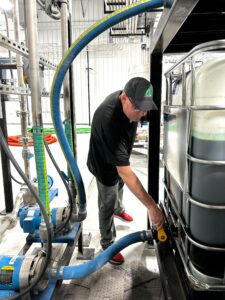
Manager Jeff Herald opens a tote station inside AgroLiquid’s new Lake City, Florida facility, sending a component to the reactor as part of the finished-product process. Each tote station, tank and transfer point has its own dedicated pump and line, ensuring every batch is handled efficiently while maintaining product quality and consistency from manufacturing to the farmgate.

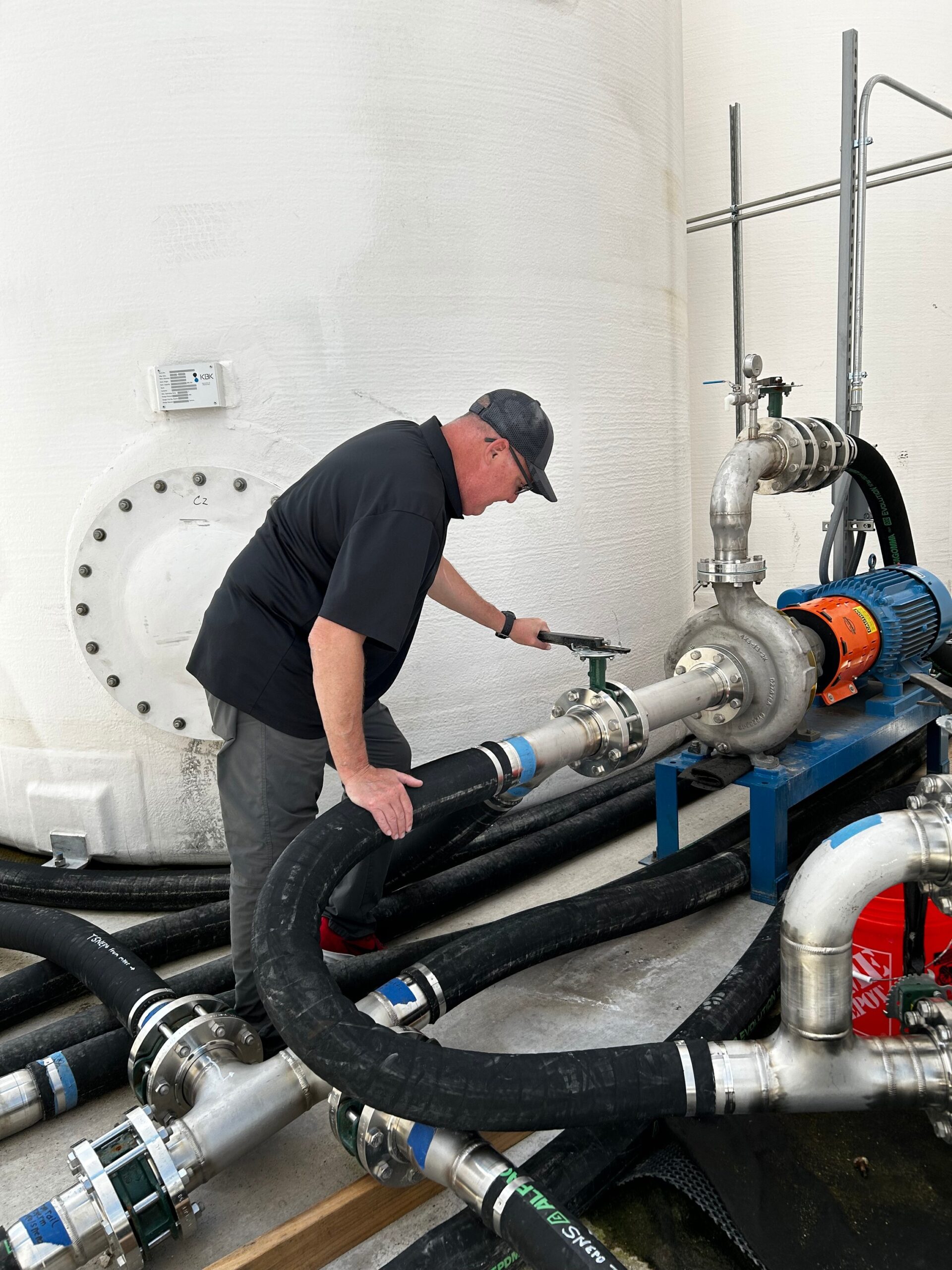
Site Manager Jeff Herald opens an exterior tank valve to send product components to the reactor. Dedicated pumps and lines for each tank and tote station streamline product movement through the facility, reduce product loss and support a controlled, efficient manufacturing process.
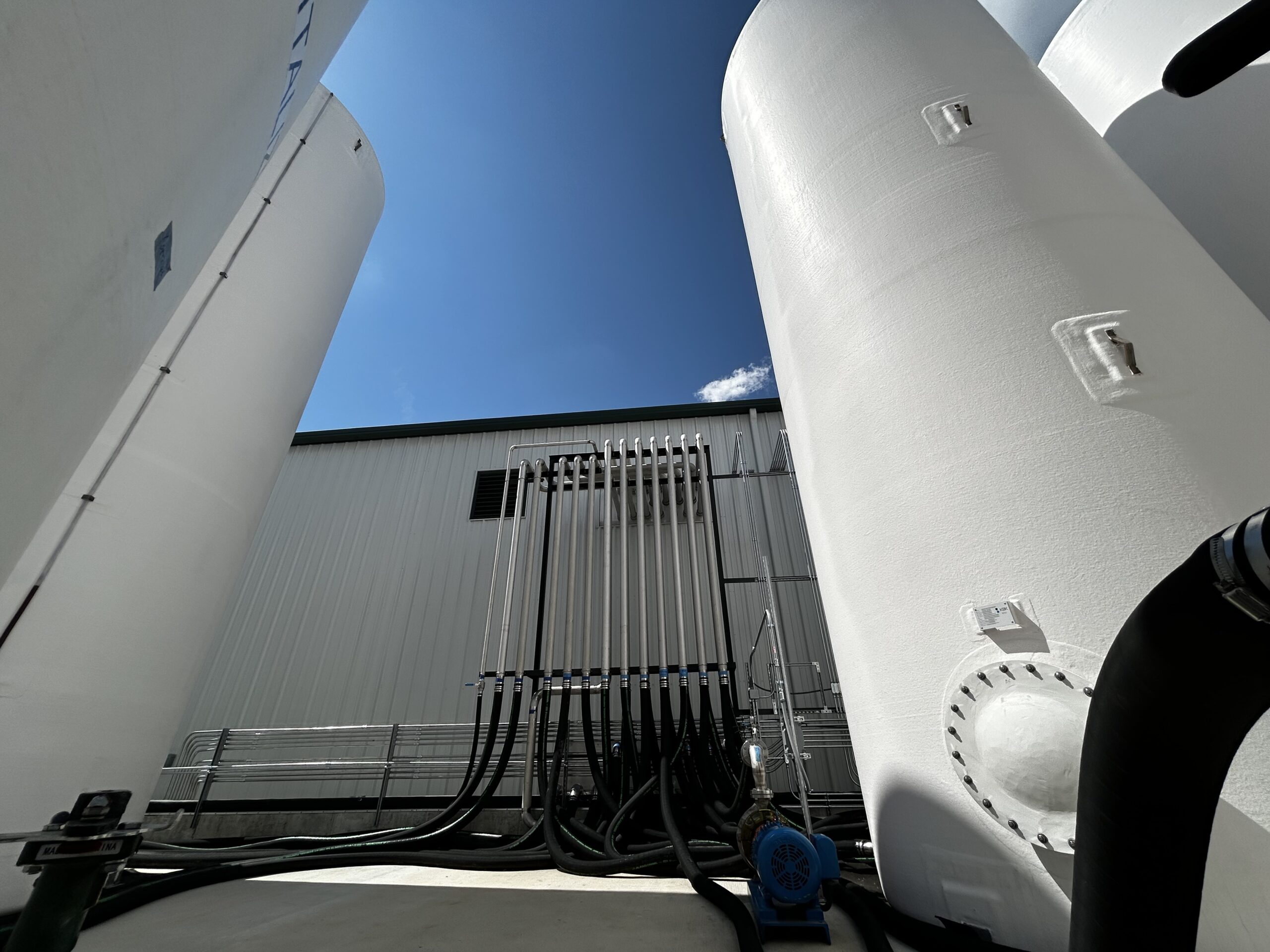
Exterior tanks connect to dedicated lines that route product either to the reactor or to truck load out. The system reduces the need for extensive hosing compared to other facilities, improving efficiency, increasing storage capacity, and enabling quick and efficient service to our grower-customers.
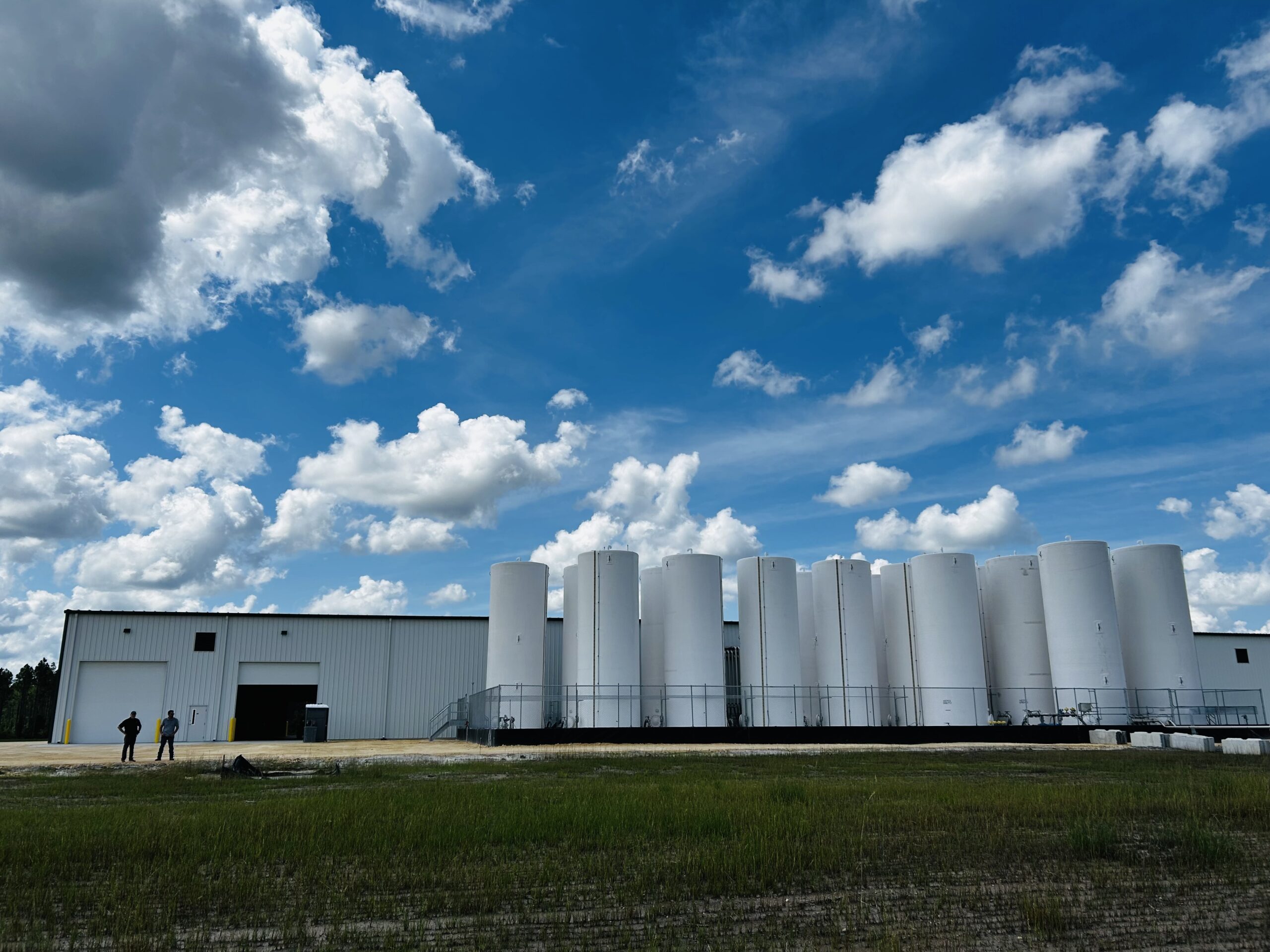
AgroLiquid’s exterior containment and truck load-out area is shown alongside the facility’s tank farm. The left bay is currently used for active load out, while the right bay is designed for a future load-out addition with piping and a load-out arm.

Related Articles

Quick Links

E-News Sign Up

Connect With Rice Farming