BOB SCOTT
FAYETTEVILLE, ARKANSAS
And then it rained… What a difference rain can make. I hope a lot of residual treatments went out between wind gusts prior to this rain setting in. There was a noticeable difference in overall rice growth and weed control in fields that were flushed versus not flushed leading up to this rainy pattern we seem to be entering. I hope the non-flushed fields catch up!
In general water makes most rice herbicides work better. I do not like to apply residual products if there is any standing water in the field and for POST applications, in general, we need about 2/3 of the plant above water for effective treatment. But products like Newpath/Preface, Clincher, and Bolero are all noticeably better when it’s wet versus dry. Of course, all residuals need water for activation. I also have more faith in some “iffy” tank-mixes with the grass herbicides, if we have good moisture and actively growing grass weeds. Still avoid the “do not” ones on the labels.
Not much other advice for while it’s raining. Just get out after this rain and scout to see what makes it through and what we need to address when it stops raining.
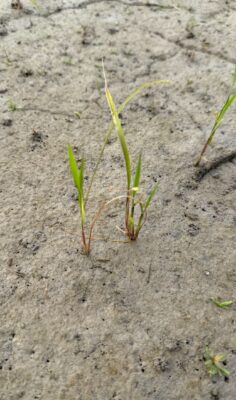
We have had a little bit of paraquat drift onto rice and other crops that I have been made aware of. Fortunately, it all seems cosmetic at this point, and I don’t think will affect yield much. The key to looking at these fields is to examine the whorl or where the new leaves are coming out, are they green, injury free and growing, if so, you are probably ok. Newpath and Roundup drift to rice are typically much more damaging than paraquat and Liberty in the long run. Be careful spraying out there. ∆
Fig. 3. Paraquat on rice.
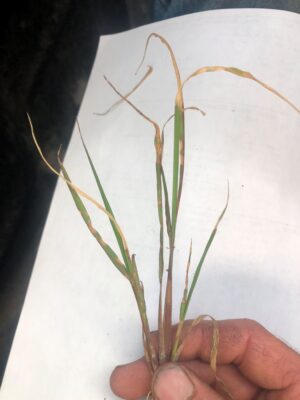
Fig. 4. Liberty (glufosinate) on rice.
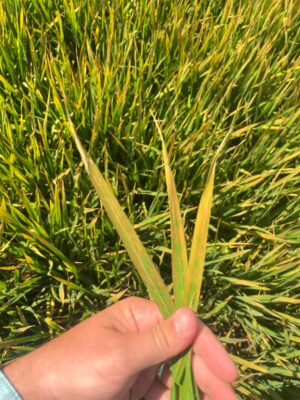
Fig. 5. ACCase on rice.
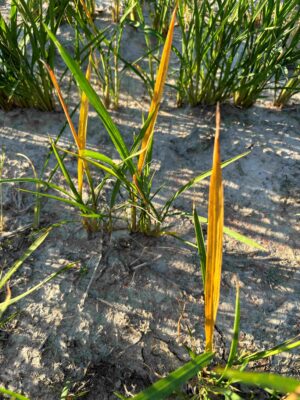
Fig. 6. Glyphosate on rice.