

Specialists Speaking – TYLER MUSGROVE – LOUISIANA
Over the past 10-15 years, rice insect control has been an afterthought in Mid-South crop management. And it was for good reason — the pest spectrum was limited to a small handful of relatively predictable pests and insecticidal seed treatments worked well against these pests. Now fast forward to 2026 and the insect situation has developed some interesting wrinkles as far as Louisiana goes.
The Big Three
The major insect pests in Mid-South rice are the rice water weevil, rice stink bug, and lepidopteran stem borers. In Louisiana, we only manage two of the three because foliar insecticides are dangerous around crawfish operations, so rice stink bug management is largely absent from the majority of rice acres in Louisiana (northeast LA being the exception). For the other two, insecticidal seed treatments have performed so well and reliably that we sometimes forget how detrimental these pests can be to rice. Over the past decade, we’ve come to expect around 80% control of rice water weevil when using Dermacor X-100. In Louisiana, this is the only product that has shown activity against both water weevils and stem borers, which makes it a critical component of our insect management programs.
However, a string of control failures from 2022-2024 caused us to take a closer look at the data. Right now, we’re looking at 50%-60% control of rice water weevil with Dermacor X-100 and somewhat inconsistent control of stem borers. This has led us to revisit some cultural controls like draining and drying fields for our water weevil control in addition to foliar pyrethroid applications at permanent flood. Additionally, we pursued an EPA section 18 exemption for Vantacor to control stem borers mid-season in 2025. We’ve always recommended that producers stack multiple seed treatments to get the most out of the technology (Dermacor + CruiserMaxx being the most common example). Even though it seems costly up front, our data has been consistent in showing it pays to have multiple insecticidal seed treatments. All this to say, insect management isn’t so simple anymore, which leads me to the elephant in the room…
The Bigger One
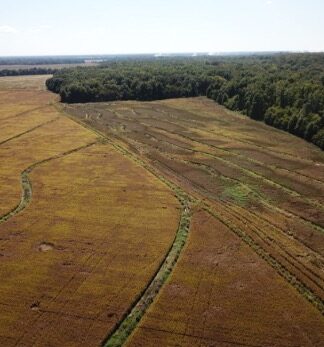
I’ll go on record and say the rice delphacid outbreak of 2025 was the most significant entomological event to occur in U.S. rice, possibly ever. To summarize what happened in Louisiana: the first specimens were detected on July 25 and formally identified as rice delphacid on July 29. The first report of damage was reported on Aug. 28. From there, things progressed very quickly to where pretty much every rice field in Louisiana from August through October still waiting to be harvested had delphacids. The silver lining was that it gave our entomologists enough time to get some tests out and generate the data necessary to support the Courier section 18 exemption. Needless to say, we are confident that we have an answer with Courier, but timing will be everything. We do not have thresholds established, and critical management timings based on rice growth stage are still being developed. However, based on observations from 2025, we do know populations can ramp up incredibly fast and detecting even a few adult delphacids early may justify that first application. This will certainly be a team effort, and we are encouraging our producers in Louisiana to keep in close communication with our entomologists so we can assist with management decisions.
Much of my time during the week is spent conducting our rice delphacid monitoring program. This survey covers the entire state and is intended to provide real-time assessments of rice delphacid infestation and incidence of Hoja Blanca Virus as they develop throughout the summer. So far, neither the insect nor the virus have been detected in the state, and I do not anticipate detecting the first specimens until May or June. Nonetheless, this program hopes to serve as an early warning system for the rest of the Mid-South should Louisiana be the first to find delphacids beyond Texas, similar to the situation last year. ∆
Image 1: Severe delphacid hopperburn in Northeast Louisiana. Photo credit: Hank Jones
TYLER MUSGROVE
LOUISIANA