

Kurt D. LaRose MAFG
When Debbie Hoffpauir says, “This has been a two‑person show,” she isn’t exaggerating. Every part of the operation — planting, harvesting, milling, packaging, delivering, and selling — is carried out by Debbie and her husband, Ben, on their small rice farm outside Bay City, Texas. Ben’s father and Debbie’s son help when they can, but the heartbeat of the farm is the couple themselves, working side by side in the Texas heat.
They run their mill with the same hands‑on precision that defines the rest of their work. Even with modern dryers and scales, they still back up records by hand and have kept paper logs since 2008. Every 25lbs bag of rice can be traced back to the exact field it came from — the kind of meticulous record-keeping the USDA would likely applaud. Technological data is maintained as well, however there is some pride in being able to continue paper logs for each crop, something generations ago was the norm.
Their farm is small by Texas standards, but their ambition is anything but.
Why Jasmine Rice Matters — and Why It’s Rare in the U.S.
Jasmine rice is beloved worldwide for its fragrance, texture, and cooking quality. But almost none of it is grown in the United States. Only about 1% of Jasmine consumed domestically is produced in the US; the remaining 99% is imported from Thailand, Vietnam, and Cambodia. Thailand alone supplies up to 85% of U.S. Jasmine imports.
For most US farmers, that imbalance might be discouraging. For Ben and Debbie, it was, and still is, an opportunity.
“We wanted to produce Jasmine in the U.S.,” Ben says. “We thought, why not try?”
The couple planted their first Jasmine in 2021. Today, Jasmine accounts for half their business — and demand keeps growing. The Hoffpauir’s attribute allot of their success to a bit of curiosity, an interest in research, some trial and error, and invaluable input from outside experts such as their very own Independent Rice Consultant, Weldon Nanson. Ben said, “Debbie is great at doing her research; she knows what’s new and what’s coming up next.” Debbie responded, “and help from Weldon; we could not be where we are without his wisdom.”
Texas: A Tough Place to Grow Jasmine
Texas is known for long‑grain rice, but not aromatic varieties. Jasmine is technically a long‑grain rice, but its aroma, texture, and cooking qualities make it far more sensitive to growing conditions and a much more niche’ product, even though Jasmine can be bought in big box stores throughout the US – it’s still not a US product – and in some cases may not be as safe as a US grown Jasmine rice product.
To be sure, Texas farmers face steep challenges. There is extreme heat during flowering, which reduces pollination and yield; there’s unpredictable water availability, critical for paddies and weed control; there are planthopper infestations, especially the invasive rice delphacid as well as a narrow planting window, and where timing determines aroma and grain quality.
Ratoon cropping — the second harvest that often determines the most profitability — is increasingly threatened by pests. Last year, delphacids destroyed one of the Hoffpauirs’ ratoon fields entirely.
“You scout every other day,” Ben says. “If you don’t, you will lose it. We’re fortunate to have someone who scouts for us because even one day can make a difference in the outcome as good or bad.”
They walk their fields several times a week and use drones for targeted spraying when needed. In 2025, using a walk/monitor/spray technique, they cut chemical use by 50%! Occasionally the couple still use planes to spread chemicals battling what may hinder Jasmine, but thanks to better monitoring and precision treatment less is needed. “We’re pretty pleased about that. We know chemicals are needed, but if you can use 50% less of it with improved monitoring and targeted treatments, it saves money and probably does the rice and the buyer some good too.”
Soil Barriers and Nitrogen Sensitivities
Nitrogen is carefully adjusted according to soil type because too much can reduce aroma. Sandy, clay, and mixed soil can all occur on the same farm, so fertilizer rates must be tailored to each field. That adjustment helps determine yield, fragrance, and overall grain quality.
While rice cropping is suited to coastal properties, it’s not only the water that matters, but salt can impact flavor as well. Too much or too little can change things. Water comes from both groundwater and the Colorado River Authority.
The Farm: Small, Determined, and Growing
The Hoffpauirs farm 650 acres, rotating rice with cattle. Cattle are a natural weed‑control system passed down through generations as Ben defines it. “Cattle are the best herbicide for rice production,” Debbie says with a grin. Rotations work great for cattle who will also feed off of the rice stubble, besides other weeds that come up – helping with even better rice quality.
Typically, Debbie and Ben plant 450 acres of rice, enough to supply their mill and meet demand from:
- Restaurants
- Three school districts
- Fourteen retail outlets
- Wholesale buyers
- And new Central American export customers
Their retail brand, HG Rice Mill, mills rice no more than two weeks before sale — a freshness imported rice cannot match. “It’s just a nice touch to the quality of work our mill tries to put out.”
Production Snapshot
- 800,000 lbs. of milled rice per year.
- 320,000 lbs. of Jasmine (expected to reach 1 million lbs. this year).
- 50/50 split between long‑grain and Jasmine.
- Growing demand from chefs who prefer the Texas‑developed Presidio variety.
Post‑Harvest: Protecting Aroma and Quality
The Hoffpauirs store rice in four grain tanks with:
- Elevated aerated floors
- 24/7 airflow
- Automatic propane‑assisted humidity control
- Stirring units to maintain consistency
Their buyers — especially chefs — praise the rice for its flavor, texture, and consistency in both Mexican and Asian dishes. The company sells to about 14 retailers, three school districts and wholesales to larger mills – but it is the chef’s who sing the most praises of HG Mill Jasmine.
Standing Apart from Imports
Imported Jasmine rice can legally contain up to 20% non‑Jasmine rice. Some imported samples have shown residues from up to fifteen pesticides not permitted in the U.S.
“That kind of stuff just doesn’t happen here,” Ben says. “When you buy from us, you’ll know even what field it was grown in.” Plus, with the targeted identification of fungus, rice weevils and planthoppers (including the aggressive delphacid), HG Mill farms use less chemicals than ever. Thanks to personal daily field checks, drones, and at times plane spraying.
Every dollar spent on their rice stays in the U.S. agricultural economy.
Political and Systemic Interests that Extend Outside a Small Texas Farm
The Hoffpauir couple, while claiming to have a small farm, were invited by President Trump, and attended the Great America Agricultural Celebration held on the South Lawn in March of this year. It was dubbed “the single largest gathering of American Farmers the White House has ever seen.” Debbie said, “and it led to real changes in the US Farm Bill too.”
Besides the political implications of a presidential invitation to such an event, Debbie and Ben are active in telling the political systems promoting and educating others about the importance of growing Jasmine here in the US. Ben states “not to really brag necessarily, but Debbie knows rice production from the seedling stages, the research behind it, how it is grown, and marketed; she can hold her own talking to anyone about Rice Farming and I’m proud of that.” Debbie says “and I am proud of it too. I think more people need to understand not just jasmine rice farming, but farming in general.”
A Family of More Than Five Generations Deep
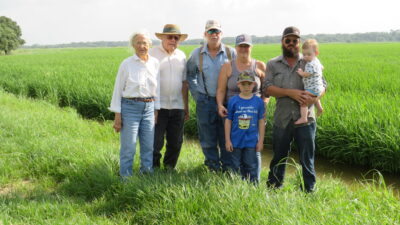
Rice farming runs through both families. Ben’s great‑grandfather farmed rice in Louisiana. So did his grandfather, father, and uncles. Debbie comes from a long line of Kansas farm women who ran tractors, raised cattle, and raised families — often all at once. “The two of us working together, living together and having a family together is a sure way to know when you’re meant to be together” says Debbie.
“My great grandmother farmed. My grandmother farmed. My mom farmed,” Debbie says. “I think of myself as carrying on what those strong women did before me.”
Their grandchildren (and even a great grandchild) now get to see and grow up on the farm, learning where food comes from — something Debbie believes many Americans no longer understand.
Debbie is active in the Rice Council and has traveled to Capitol Hill and abroad on trade missions, advocating for fair trade and U.S. rice producers.
The Future: Simple Goals, Deep Purpose
Their goals aren’t flashy.
“Get more customers. Keep the customers happy. Just feed people,” Ben says.
As for the next generation, he adds:
“My one son is already on the farm and he wants to take over some day. We think that’s great.”
“When my kids go out and make their fortunes, if they want to come back to the farm, it’s here.” It’s a simple statement, but it carries the weight of five plus generations — and the hope that the sixth might someday take the reins. ∆