

Dwight Roberts / Former President and CEO US Rice Producers
Rice farmers must speak for themselves. If they do not, others will speak for them—and those voices may not fully reflect farmers’ interests. We have seen that reality firsthand since 1997, although the tension between producers and processors is far older. Some things never change, but the new normal confronting U.S. rice farmers is no longer acceptable.
The U.S. rice industry is under serious stress. Long-grain planted acreage has fallen to its lowest level since 1983. Rural banks that farm families depend on are struggling. Meanwhile, roughly one-third of the rice consumed in the United States is now imported from Southeast Asia, a share that has steadily increased over the past 30 years. For U.S. farmers, that may be the clearest measure of how much ground has been lost in their own domestic market.
That raises a difficult but necessary question: What have rice farmers received in return for decades of checkoff assessments? Years ago, the Arkansas attorney general characterized the state’s assessment as a tax on farmers. Yet too much of that money appears to have supported an expanding organizational bureaucracy that has become less effective at representing producers’ interests. Farmers can no longer afford organizations that place image, public-relations campaigns, and preservation of the status quo ahead of measurable results. Nor should they continue supporting oversized, highly paid staffs without clear accountability to the farmers who provide the funding.
For long-grain rice farmers—from the Missouri Bootheel to the Gulf Coast—farm prices are ultimately tied to the export market. That market is also in turmoil. Quality concerns have opened the door for South American suppliers to gain access to markets once dominated by U.S. rice. Rough-rice exports have fallen by nearly 33 percent over the past two years. Farmers deserve a clear explanation of why traditional U.S. buyers are turning to other suppliers and why both export volume and export prices have weakened.
More importantly, farmers need to understand the fundamental problems affecting export competitiveness and how their checkoff dollars are being used to address them. The first step is to ask a direct question: What specific actions are being taken today to restore U.S. rice competitiveness in the export market? Farmers should not be satisfied with answers designed merely to placate concerns while checkoff funds continue to support an ineffective bureaucracy.
As the industry moves from a massive carryover toward an extremely tight, near-pipeline-minimum supply situation, this is the year for farmers to speak up and demand answers. If these issues are not addressed now, the industry risks moving beyond demand loss to permanent demand destruction.
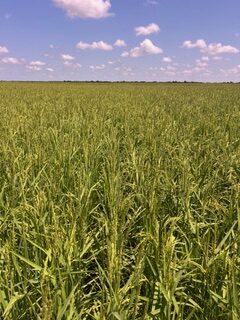
Farmers have made a special effort to plant Jasmine rice this year due to the growing popularity in the U.S. market. This field of CLJ01 (Horizon Ag) is the first Clearfield aromatic rice variety and located on the farm of Casey Smith in Brazoria County, Texas.
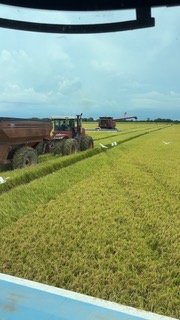
The Louisiana conventional variety known as Avant has gained popularity among farmers and buyers in Mexico, Dominican Republic, Honduras and elsewhere. This field is located on the farm of Dustin Watkins near Welsh, Louisiana.
Dwight Roberts / Former President and CEO US Rice Producers