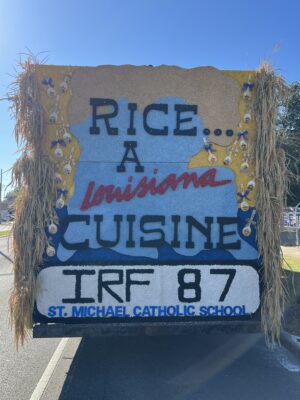

Photo by Emily Rose Photography / www.emilyrosephotography.com
BY KURT D. LAROSE
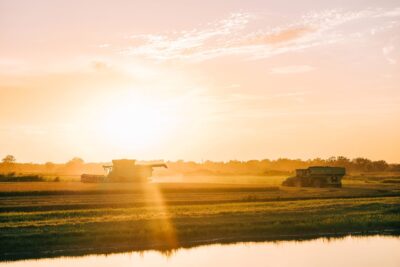
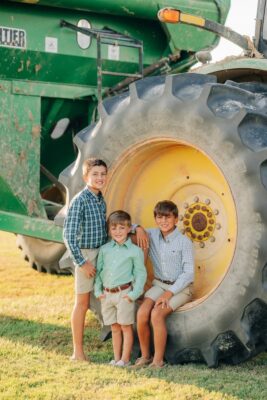
On a warm Louisiana morning, the Broussard farm looks like a patchwork of past and present — laser and Satellite leveled fields stretching toward the horizon, crawfish traps stacked beside tractors guided by satellite, and a family whose roots in rice run deeper than the soil they work. For Mary Katherine Broussard and her husband Robbie, farming isn’t a profession so much as an inheritance, a rhythm passed down through generations who learned to coax a living from the flat, water‑rich land around Crowley.
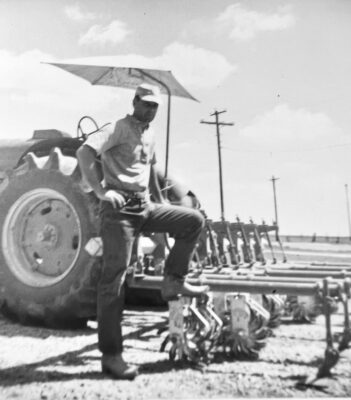
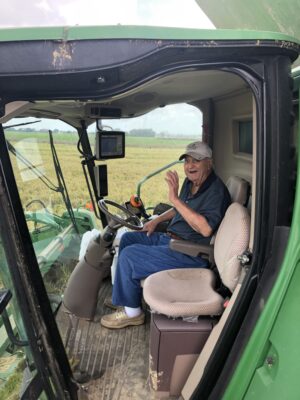
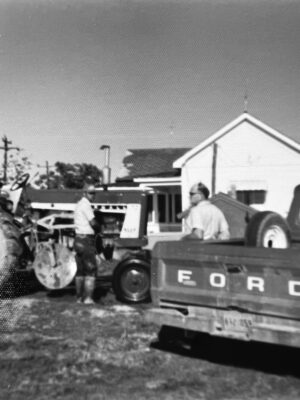
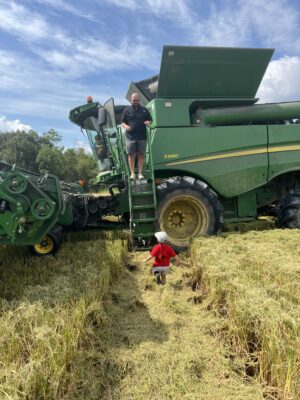
“My grandfather cut his last field at eighty‑two,” Robbie says, a mix of pride and disbelief in his voice. “He farmed from sixteen until the day he retired. Born in 1937, passed in 2021, he was still running the combine two years before he died.” Mary Katherine adds, “we still have the photo of him driving the combine and it’s a conversation piece every time our family gets together.”
That memory — an old farmer grinning like a kid in a candy store as he climbed into a modern combine — is the kind of moment that anchors the Broussard story. It’s a reminder that farming here isn’t just work; it’s lineage.
A Family Built on Rice and Crawfish
The Broussard’s connection to rice runs on both sides of the family. Robbie grew up around the Broussard Rice Mill, founded by his grandfather (his dads father). It was the first commercial rice mill in Mermentau somewhere through the mid-to-late 20th century. Robbie’s other grandfather (moms father) farmed his own land, then passed it to his uncle, and eventually tohim and his brother. Mary Katherine spent most of her childhood summers and weekends on her uncles farm; with combine rides, shucking corn, and peeling crawfish. “It’s always been part of us,” he says. “It’s what we know.”
But LouisianA farming has changed. Where soybeans once thrived, crawfish now dominate, at least for the Broussards. Weather shifts, soil changes, and market realities pushed the region toward aquaculture. What began as a small family crawfish operation has become a commercial necessity.
“We almost have to sell crawfish to make ends meet,” Robbie says. “Some years rice makes money, some years it doesn’t. Crawfish is how we make it.”
The two crops are intertwined — crawfish feed on rice, and the cost of growing rice for crawfish is the same as growing rice for market. Breaking even is often the goal. Profit is a bonus.
Modern Farming, Old Roots
Planting season begins with precision. Tractors equipped with satellite‑guided hydraulics level the fields, replacing the water‑leveling blades of decades past; it’s an update that has changed 3 times – from the blade, to laser leveling and now to Satellite. Seed purchased from local companies goes into drills, tucked into moisture where blackbirds can’t steal it. The work is efficient, but still grueling.
“The hardest part today is the cost,” Robbie says. “Input costs are high, and the rice market is low. You’re always trying to make the numbers work.” In the dry season, it costs a lot more to produce rice as water has to be pumped to the fields, affecting labor, energy, water levels and the cost for electricity.
Yet Louisiana gives them advantages too. Water is abundant, and the flat land makes irrigation easier. Dry years produce better rice, though they punish the crawfish. And the region’s identity — Acadia Parish, home of the International Rice Festival — keeps rice culture aliveeven as the economics shift. The community hasto change annually when anywhere from 100,000 to 300,000 people converge for one of the oldest and largest agricultural celebrations.
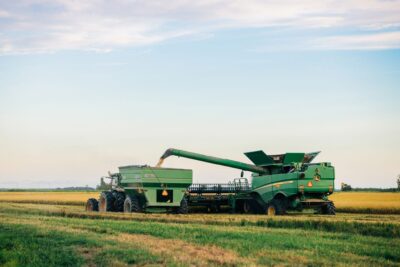
Photo by Emily Rose Photography / www.emilyrosephotography.com
Tracks instead of tires
The new combines equipped with tracks reduce rutting, preserve soil structure, and improve second‑crop potential. It’s a small detail with big implications for sustainability and long‑term land stewardship.