

Solar Leasing on Agenda for NALC, NASDA Foundation’s Mid-South Conference
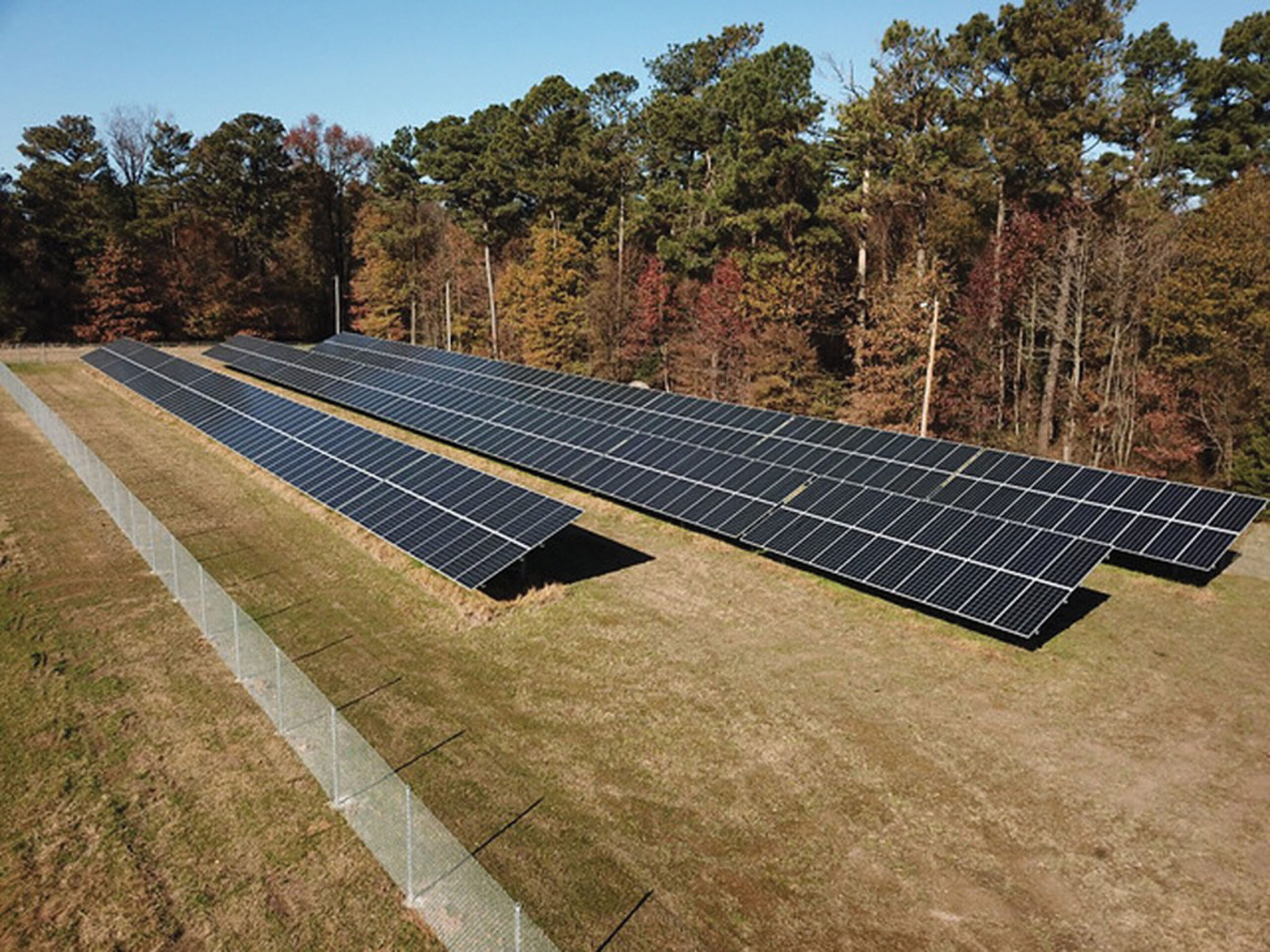
To install, or not to install, that is the question — and attendees of the 12th Annual Mid-South Agricultural and Environmental Law Conference will have the chance to hear perspectives on solar lease agreements and solar development from two experts in their respective fields.
While renewable energy efforts such as solar panel installations have increased in recent years, there are many factors for farmers, landowners, and developers to consider before making the decision to work together on a long-term project.
At the Mid-South, Seth Hampton, member at Rose Law Firm, and Will Veve, land acquisition and development at DESRI, will discuss both sides of the transaction in the session, “Solar Leases and Development in the Mid-South: Pointers and Pitfalls.”
The conference will be held June 5-6 in Memphis, Tennessee, and is co-hosted by the National Agricultural Law Center, or NALC, and the National Association of State Departments of Agriculture Foundation, or NASDA Foundation. It also features a livestream option. Registration, agenda and more is available at https://nationalaglawcenter.org/legaleducation/mid-south-2025.
Hampton has years of experience representing farmers, landowners, and their lenders in negotiating solar lease and purchase options involving developments throughout the United States.
“Rental rates certainly make solar leases attractive, but there is much for landowners to consider when approached by developers about installing panels and related facilities on their land,” Hampton said. “Provisions concerning rental rates, land included within the leased premises, minimum rental/acreage requirements, crop damages, rights of third parties (such as easement and mineral interest owners, farm tenants and lenders), property tax increases, insurance obligations, early termination rights, decommissioning/restoration obligations and security, and more should all be considered before making a decision.”
Veve will bring insight regarding the developer’s perspective to the presentation, as DESRI develops, owns, and operates U.S. renewable energy projects.
“Both developers and landowners have much to consider regarding coming to an agreement for the development of a project,” Veve said. “There is tremendous shared opportunity for both the landowner and developer. Having an open, collaborative process from the beginning is the most important aspect of this relationship to ensure both sides are successful.”
NALC Senior Staff Attorney Rusty Rumley says that NALC attorneys have heard an increased amount of inquiries regarding solar leasing in recent years.
“Solar leasing has been around for quite a while, but it garnered more attention in recent years due to the Inflation Reduction Act of 2022, which incentivized the adoption of solar through various mechanisms, like tax credits,” Rumley said. “It’s a topic that landowners and developers should investigate carefully before coming to an agreement. This session at the Mid-South Conference provides an opportunity to learn about what to consider from both the landowner and developer sides.”
— Drew Viguet
National Agricultural Law Center
U of A System Division of Agriculture
Session I of the 2025 Rice Leadership Development Program Visited the Gulf Coast
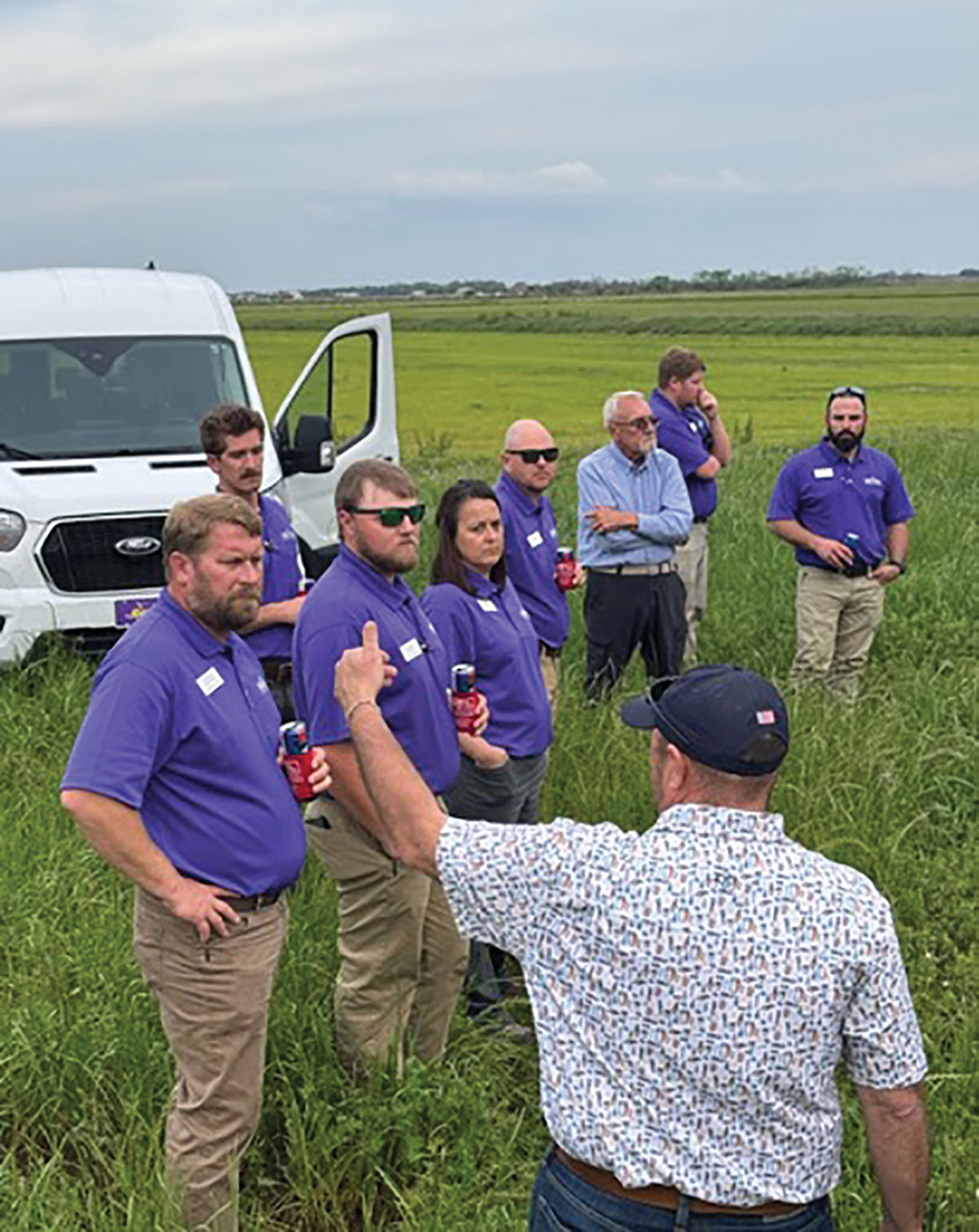
As a rice farmer from California, it was a privilege to tour in one of the most dynamic and innovative rice-producing regions in the world, exploring the rice industries in Texas and Louisiana to see how our partners in the South approach rice farming, milling, and trade. It gave me valuable insights into the similarities, differences, and challenges we all face in this industry.
One of the key things that stuck with me as Pamela West with Texas Rice Milling and Brookshire Drying Company shared the history of the Texas rice industry in Katy was how the land between Houston and Katy, which used to be prime rice-growing area, had been developed into urban areas in less than 25 years. She talked about the growing number of solar farms in nearby towns. I was surprised the next day to see about 4,000 acres of farmland that had recently been turned into a solar energy farm.
We heard similar sentiments from Heath Bush, Dick Ottis, and L.G. Raun at Rice Belt Warehouse where they shared what the future of Texas rice might look like, especially given the significant decline in production acreage due to drought, urban development, and rise of those solar energy farms.
Greg and Donnell Devillier at Doguet’s Rice Mill and Turf Farm in Beaumont walked us through the entire production process from branding of rough rice to the final stages of milling and packaging — it was great to witness the full cycle of rice production from start to finish.
The stop at RiceTec, where we met with Dr. Brian Ottis, was my first time visiting a facility like this, and I was both impressed and thoroughly informed about the importance of hybrid seed, whether being high yield or disease resistant.
Before crossing into Louisiana, we practiced communication skills with mock on-camera interviews; learned about the rice brokerage industry, including rice quantity, quality, and international trade from Michael Creed; the role of equipment dealers from Terry Hlavinka; and talked drought, high cost of water, and new wells with farmer Timothy Gertson on his farm.
Port of Lake Charles and Southwest Louisiana Rail Facility stops provided us with insights into exports and logistics — and my first taste of boudin (recommend!).
We enjoyed meeting with several alumni along the way, from a restaurant event in Texas to a crawfish boil at Christian and Julie Richard’s farm (also a delicious first for me). At every stop, we visited with farmers and had great discussions about rice farming and how we can improve and sustain rice farming for the future.
Bobby Hanks and his team at Supreme Rice welcomed us with an impressive tour including one of the most modern and well-maintained mills I’ve seen and a presentation of their history and operations.
We also got to see more research in Louisiana, including a brief stop at the Louisiana Rice Research “South Unit,” where one of our classmates, Connor Webster, works, and a visit to the H. Rouse Caffey Rice Research Station, where we got to watch a seeder in action. Coming from California, where we flood our fields and use crop dusters to plant, this was fascinating to me.
Fred and Paul Zaunbrecher welcomed us to their rice and crawfish farm, showed us the sorting facility that was sizing crawfish, and then they took us out on boats to see how the crawfish are harvested.
Later, 2.5 hours east in New Orleans, we visited the USDA Southern Regional Research Center to learn some innovative projects they’ve been working on, including repurposing rice by-products for use in the medical field, and a new health drink made from rice, packed with probiotics, and designed to support gut health.
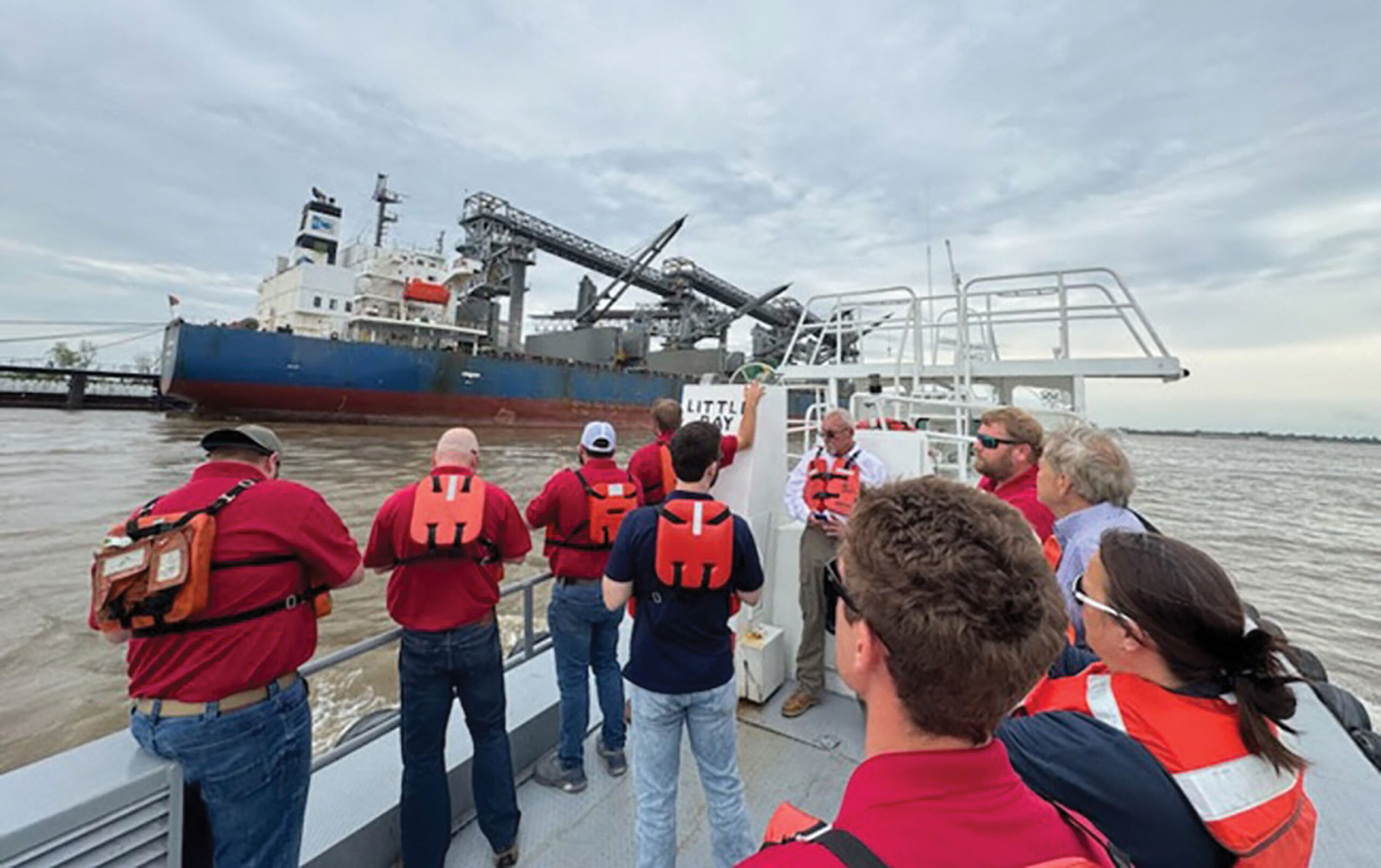
A trip to the Russell Marine Group taught us about managing trade and cargo operations from the U.S. to international markets, and we met with the owners Pat and Tom Russell. We then headed out on a crew boat to travel along the Mississippi River, getting a firsthand look at cargo ships, mills, and barges in action.
The week literally took us from research labs and seeds all the way through to export barges destined for a foreign market!
On behalf of myself and my classmates, I want to sincerely thank all the people we met with who shared their knowledge, as well as The Rice Foundation and the generous sponsors: John Deere Company, RiceTec, American Commodity Company, and Supreme Rice. It’s been an amazing and transformative experience that has broadened my perspective on the rice industry, and we’re just getting started.
— Max Alves